Glory Days (1984)

kids-baseball-celebration-main


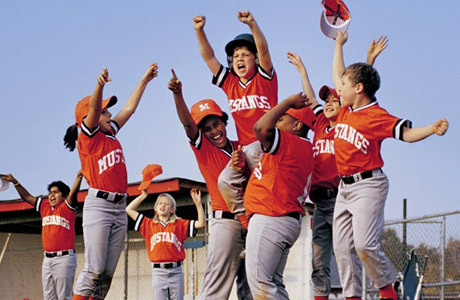
I had a friend was a big baseball player   Back in high school

He could throw that speedball by you     Make you look like a fool boy

Saw him the other night at this road side bar

I was walking in, he was walking out

We went back inside, sat down, had a few drinks

But all he kept talking about was glory days…

Glory Days is a song of reminiscence. How long do we hold on to the past? How do we reconcile our past glories with our current situation? When did life stop being about baseball and girls and start being about mortgages and car repairs? Take this chance meeting between two old friends described in the first verse. After the obligatory small talk about where they now reside, how many kids they have, and whether they are married or divorced, where does the conversation go? “All he kept talking about was glory days.” Seeing an old friend brings you back to a simpler time.

We see many examples of the idea of escape in Springsteen’s writing. This conversation is an escape. “Remember that game when you struck out the first 5 batters?” “Yeah, but without your bases-clearing triple, we don’t win that game.” “Man, what a game. Bartender, another round!” By reliving childhood through shared memories, they are no longer adults. They are teenagers. In the morning, they will fight off a booze-induced headache and commute to a 9-to-5 job that serves as both tormentor and savior; a return to the real world. But for that one night, the glory days are as real as anything.

Well there’s a girl who lived up the block   Back in school she could turn all the boy’s heads

Sometimes on a Friday I’ll stop by and have a few drinks   After she put her kids to bed

Her and her husband Bobby, well they split up

I guess it’s two years gone by now

We just sit around talking about the old times

She says when she feels like crying she starts laughing thinking about, glory days…

Just like we all knew the kid with the 90 mph fastball, we also all knew that girl—always in the homecoming court and a look that would bring you to your knees. But where is she now? Where is she now that 20 years have burned down that road? The mental image of the 17 year old with the killer smile morphs into a more sober reality: divorced mom with two kids fighting to hold together what’s left of her family. Friday nights at the high school dance are now Friday nights with an old friend and an empty bottle of Riesling to collect the tears. But the old friend and the memories provide the escape. Gone are the divorce lawyers and the marriage counseling bills, and for just a few hours she’s back in that high school cafeteria. “Remember that time Katy Goodwin snuck the Peach Schnapps up the bleachers of the homecoming game?” “Yes! And how she fell down the entire set of steps on her ass?” “Man, her parents wouldn’t let her out of the house for a month.” “You want to open another bottle?” Escape can be a wonderful thing. You know that feeling when you start to cry and end up just laughing instead? This verse of the song captures exactly that.

Now I think I’m going down to the well tonight     And I’m gonna drink till I get my fill

And I hope when I get old I don’t sit around thinking about it, but I probably will

Yeah, just sitting back, trying to recapture, a little of the glory of,

Well time slips away and leaves you with nothing mister but

Boring stories of glory days…

We hope for a brighter future than our past. We don’t want to envision ourselves just sitting back, trying to recapture our past glories. Even though our past may have been great, we still hope to improve our lives with each day that passes. In reality, however, it is difficult to live up to nostalgia. We long for what we can’t get back: our innocence, our jauntiness, our youth. We pine for it. The funny thing about “boring stories of glory days” is that they are anything but. If you lived it, it’s never boring. That’s why we tell the same damn stories over and over again: because they immortalize a part of us that we can’t get back. So, I think I am going down to the well tonight. And I just might drink until I get my fill. And if time slips away, and leaves me with nothing but boring old high school stories? I think I’ll be just fine.


“Glory Days” appears on Bruce Springsteen’s 1984 album Born In The U.S.A.

Land Of Hope And Dreams (1999)

amazing_sunrise_on_the_track_hdr

Grab your ticket and your suitcase

Thunder’s rolling down this track

Well you don’t know where you’re going now

But you know you won’t be back…

The opening lines to this eternally optimistic Bruce song harken back to his previous songs of escape. Remember how Thunder Road’s two lanes could take us anywhere? We didn’t really care where; we just knew it was better than here. The two lanes of open road are now replaced by the rails, ties, and spikes of the American railroad system. But the destination remains the same: a better place. Picture the old migratory workers, who we colloquially refer to as “hobos,” hopping from train to train in search of a better job, a better pay, a better life. This is their train.

Well, darlin’ if you’re weary

Lay your head upon my chest

We’ll take what we can carry

Yeah, and we’ll leave the rest…

We don’t need much on this trip; just your head upon my chest. We can leave everything else behind. These are the two young lovers from Thunder Road, leaving that town full of losers and hopping a train to a land where hope lives. This is their train.

Leave behind your sorrows

Let this day be the last

Tomorrow there’ll be sunshine

And all this darkness past…

We all experience some form of sorrow in our life. Look at some of the characters from Springsteen’s Nebraska album; Johnny 99 or Frankie for example. They made mistakes. In some ways, they made their own sorrow. In some ways, society may have pushed it on them. The bottom line, however, is that they are in a bad place. Some of it is of our own doing. This train provides light when all else seems dark. There is sunshine down at the end of these tracks. This is their train.

This train

Carries saints and sinners

This train

Carries losers and winners

This train

Carries whores and gamblers

This train

Carries lost souls

I said this train

Dreams will not be thwarted

This train

Faith will be rewarded…

The Land of Hope and Dreams is an inclusive place. If you have faith, love, and desire, we’ll see you there. If you have the will to get up after being repeatedly knocked down, we’ll see you there. The Land of Hope and Dreams is not for the pessimists among us. They can stay home. It is for the optimists; the ones who know there’s a better place somewhere. It is for the ones who see the beauty in life, no matter how cruel it has been to them. So come saints and sinners, come losers and winners; the Land of Hope and Dreams waits for us all. Grab your ticket and your suitcase, because this is our train.


“Land of Hope and Dreams” was a staple of the 1999-2000 E street Band reunion tour. It’s first studio appearance is on 2012’s Wrecking Ball. Jon Stewart requested that the band perform this song as his last “moment of zen” on the final episode of “The Daily Show.”

RACING IN THE STREET (1978)

1969_chevrolet_camaro-pic-21651

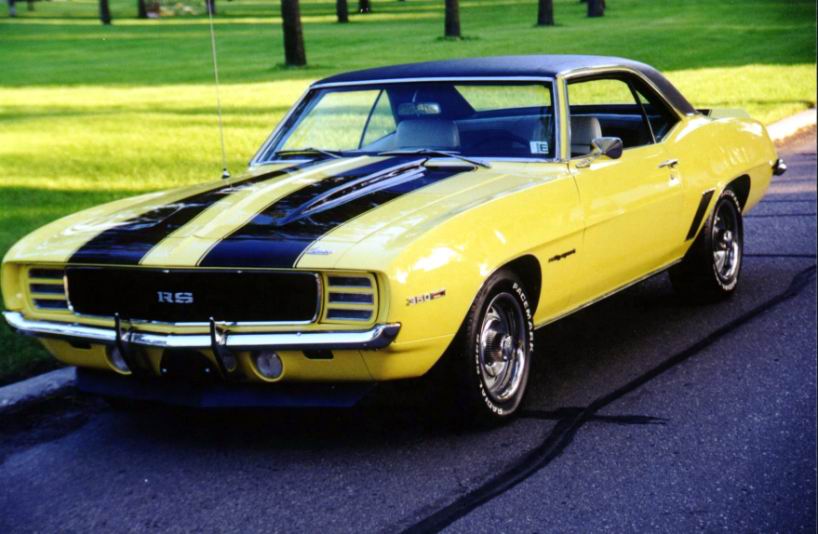
“I got a sixty-nine Chevy with a 396

Fuelie heads and a Hurst on the floor

She’s waiting tonight down in the parking lot

Outside the Seven-Eleven store…”

I’ve never been much of a car guy. I’ve never owned a fancy set of wheels and the only things that come to mind when I hear the word “piston” are Isiah Thomas and the third opponent in Mike Tyson’s Punch-Out. Yet I hear these opening lines and, without exception, I become a car guy. I don’t know a 396 from a 401(k), but I put this song on and suddenly I’m popping the hood on my Honda Accord and making bizarre proclamations about the state of the carburetor. But isn’t that Bruce? Always finding a way for the listener to relate to the song, no matter the subject. For the opening verses of Racing In The Street, I become a car guy.

“Me and my partner Sonny built her straight out of scratch

And he rides with me from town to town

We only run for the money got no strings attached

We shut ‘em up and then we shut ‘em down…”

This verse reminds me of an earlier time, long before X-Boxes and iPhones. Two buddies spending time in the garage, trying to build the Jersey Shore’s best summer hot-rod. Picture it: the heat steaming off a black-top driveway, grease on their hands and face, a stack of empty Budweisers, and maybe Eddie Cochran or Roger Daltrey raising a fuss and a holler out of the 8-track player. No strings attached to this story; just cars, the strip and the summer sun. A simpler time.

“Summer’s here and the time is right

For goin’ racin’ in the street…”

At this point, this is still a song about fast cars and the eternal optimism of youth. We souped-up this old Chevy from scratch and now it’s time to race. We’ll meet up at that abandoned stretch of road down near the train tracks and may the best car win. Tomorrow, we’ll fix whatever we fucked up and then do it all again. But like so many Springsteen songs, life has a way of interrupting the blissfulness of youth. We begin to realize that this isn’t really a car song; and I am reminded that I am not really a car guy…

“Some guys they just give up living

And start dying little by little, piece by piece

Some guys come home from work and wash up

And go racin’ in the street…”

Going racing is no longer a youthful pastime for our narrator; it is now more of an escape. There is a transition going on in the song right now from youthful exuberance to the tired working man. He is now faced with adult responsibilities and relationships. While he spent his younger days living life to the fullest, he is now “dying little by little, piece by piece.” Yes, he still goes racing, but it has a different meaning now. While racing cars used to define him, it has now become a mechanism to escape what defines him: his work, his responsibilities. The pedal goes down a little more forcefully now; the smile that comes from revving the engine is now a snarl. Life isn’t so simple anymore.

“I met her on the strip three years ago

In a Camaro with this dude from L.A.

I blew that Camaro off my back, and drove that little girl away

But now there’s wrinkles around my baby’s eyes

And she cries herself to sleep at night

When I come home the house is dark

She sighs ‘Baby, did you make it alright?’”

Transition complete. They met at a drag race, where he stole her from that “dude from L.A.”  Time has stripped away that carefree life, however, and it has revealed the complexity and confusion of getting older. There is a picture of depression painted here: sadness, darkness, melancholy. This is what life has thrown at them: him escaping his depression by doing the thing that used to give him joy, and her fully immersing herself in her depression. “Baby, did you make it alright?’ is about all she can muster.

“She sits on the porch of her Daddy’s house

But all her pretty dreams are torn

She stares off alone into the night

With the eyes of one who hates for just being born…”

This is one of the bleakest lines in the Springsteen catalogue. “With the eyes of one who hates for just being born.” They say the eyes are the window to the soul, right? Well, her soul is a pretty dark place right now. This is the reality our narrator is faced with now: no longer is it he and Sonny building that Chevy out of scratch, but instead he’s trying to pick up the pieces of a broken relationship with someone who wishes she was never born.

“Tonight my baby and me we’re gonna ride to the sea

And wash these sins off our hands…”

There is a destructive, possibly suicidal vibe to this final verse. When it all became too much, they drove that hot rod straight into the sea, washing away not only their sins, but everything else they ever loved or feared. But I choose not to look at it this way. Consider me an optimist. Maybe they rode over to the ocean and then headed south along the coast, all the way to the Florida Keys. Maybe they opened a little auto shop down in Key West; hey, maybe even Sonny joined them. Maybe, amidst the palm trees and the turtles, they discovered the youth that they thought they had lost. Or maybe it’s just a song about cars.


“Racing In The Street” appears on Bruce Springsteen’s 1978 album Darkness On The Edge Of Town.

Springsteen Lyrics & I

Oftentimes my birthday puts me in a bit of a reflective mood. I tend to weigh the good and the bad of the last year and hope that the scales are tipped in my favor. They usually are. In the spirit of this reflective mood, I thought I’d compile a list of 10 Bruce lyrics that have helped me grow, helped me love, helped me laugh, and helped me cry. Lyrics that have shaped the person I am today.

10. Well so much has happened to me that I don’t understand

       All I can think of is being five years old following behind you at the beach

      Tracing your footprints in the sand

     Trying to walk like a man.  –“Walk Like A Man”

My father was my first hero. There’s a fine line between being a parent and being a friend and nobody walked that line better than he did. Never pushed too hard, but always made sure I had the guidance I needed to navigate this world that seemed increasingly hell-bent on beating you down. I remember being on the beach, following his footprints in the sand. And I remember wanting nothing more than to be like him.

9. When I lost you honey, sometimes I think I lost my guts too

      And I wish God would send me a word

     Send me something I’m afraid to lose. –“Drive All Night”

Everyone has experienced a break up. In hindsight, some were more devastating than others, but they all felt the same at the time. It really did feel like your guts had been ripped from your body and you were left with nothing. You were dying inside, just waiting for something to make you whole again. I no longer have anything that I’m afraid to lose, you took all that when you left. We like to think of every love as everlasting, and it hurts when we realize that sometimes it’s not.

8. Well I got this guitar and I learned how to make it talk. –“Thunder Road”

I got my first guitar when I was in high school. It was a black Fender acoustic that my parents bought for me from Luca Music in North Providence, RI. My old man had taught me a few chords already, so I wasn’t a complete stranger to the instrument. But it wasn’t until I got my very own that I started to find my voice, both literally and figuratively. To this day, I am a different person when I pick up a guitar; lost in a world that no one else can go to but me.

7. I hid in the clouded wrath of the crowd

     But when they said sit down I stood up. –“Growin’ Up”

I spent a lot of time in the “clouded wrath of the crowd” growing up. I had a tendency to blend in more than I stood out. But there was always a place a bit deeper inside of me that was drawn to the anti-authority, rebellious youth. Sometimes I would stand up when they told me to sit down. This song always reminds me to let your freak flag fly every now and then. Don’t always conform. Dye your hair, get a tattoo, and quit your shitty job. It feels good sometimes.

6. Now you hung with me when all the others turned away, turned up their nose

    We liked the same music, we liked the same bands, we liked the same clothes…

   And I’m just calling one last time not to change your mind

   But just to say I miss you baby, good luck, goodbye, Bobby Jean. –“Bobby Jean”

I have a good number of friends who have moved to all different parts of the country. I miss them. The memories of the good times are so real, and they never cease to make me smile. They have all carved out great lives for themselves, and I would certainly never ask them to change their mind. But I would like to just say that I miss them. Good luck, goodbye.

5. Now judge, judge I had debts no honest man could pay

     The bank was holdin’ my mortgage and they was takin’ my house away

     Now I ain’t sayin’ that makes me an innocent man

    But it was more than all this that put that gun in my hand.-“Johnny 99”

We are all just a “pink slip” away from having our worlds turned upside down. This song always reminds me not to judge those whose shoes I have not walked in, for I know not where they’ve been. It also reminds me that no matter how bad it gets, I must keep my head together, for the sake of myself and my family. Poverty leads to destitution which leads to crime which leads to prison. It’s a slippery slope that anyone could find themselves sliding down.

4. So tell me what I see, when I look in your eyes

    Is that you baby, or just a brilliant disguise? –“Brilliant Disguise”

We all wear masks. Finding love is about removing those masks. When I first started dating my wife, we both wore some brilliant disguises. It takes a long time to let someone all the way in. Now, 20 years later, we’re as naked as can be. What you see is what you get- warts and all. And I couldn’t be happier.

3. Whenever somebody’s fighting for a place to stand

   Or a decent job or a helping hand

   Wherever somebody’s struggling to be free

   Look in their eyes, ma, you’ll see me. –“The Ghost Of Tom Joad”

I’ve always had an interest in the quest for social justice in an unjust world. We sometimes give in to the mindset that all poor people must be lazy and all rich people must work so hard. Though sometimes there may be shards of truth in this thinking, the reality is that it is never that simple. Not by a long shot. “Boot straps” alone are not enough, everyone needs a little help now and then. Bruce likes to write about the gap between “the American Dream and the American Reality.” This song might be his best work on the subject.

2. We busted out of class, had to get away from those fools

    We learned more from a three minute record baby

    Than we ever learned in school. –“No Surrender”

I’ll admit it; I wasn’t the greatest student as a teenager. I knew what I had to do to get by and I did just that. To this day, I’m still not exactly sure why I need to know the hypotenuse of anything. My education was formed more by Exile On Main Street, Synchronicity, and Darkness On the Edge of Town than it was by Trigonometry, Physics, and World Civ. From Bruce’s music alone, I learned about faith, hope, love, despair, anger, tolerance, work ethic, crime, punishment, optimism, pessimism, values, and love for your fellow man. I don’t remember seeing that in a Math book.

1. For the ones who had a notion, a notion deep inside

    That it ain’t no sin to be glad you’re alive. –“Badlands”

This one lyric may have taught me more about life than anything. It ain’t no sin to be glad you’re alive. Have your morning coffee out on the deck. Take a hike in the mountains. Put on your favorite album and crank the shit out of it and dance and sing and smile. Laugh at a corny joke. Put on Miles Davis’ Kind of Blue and sit by a fire. Do a shot of whiskey every now and then; it cleans your insides out a little bit. Stay awake until the sun comes up. Sleep until noon. Hug your kids until you almost break their ribs. Kiss your wife, your husband, your boyfriend, your girlfriend but dammit, kiss someone. Because life is too short. The last things you want are regrets on your deathbed. Live life to the fullest every day, every minute, every second. And always remember: It ain’t no sin to be glad you’re alive.

Into The Fire (2002)

9-11-firefighter-1


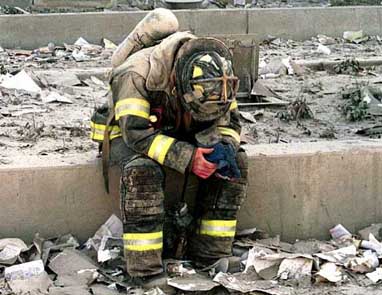
The images of September 11th, 2001 conjure up no shortage of emotions, opinions, and memories. We all remember it, and we all have feelings about it. For some, it was an act of terror that could have been prevented by both a tighter security at home and a close self-examination as to why some people harbor so much hatred for us. For some, it was the tipping point for a broader foreign policy that took the fight to our enemies across the globe. For others, a more sinister inside job was at play, a conspiracy like no other. In the end, it was a day that shook us all to our very foundations; a day that changed everyone in some way. But through all the smoke, both figurative and literal, one thing is incontrovertible: the first responders rushed into an inferno that they couldn’t be sure they’d walk out of. It was their job, and they didn’t know any other way.

The sky was falling and streaked with blood

I heard you calling me then you disappeared into the dust

Up the stairs, into the fire…

“Into The Fire” is written from the perspective of someone who’s loved one is in New York City that momentous day, doing the only job they know how to do. I picture someone in their kitchen, pacing back and forth by the phone, waiting for a reassuring call that everything is ok. In the living room, adorned with family photos, the television drones out its horrifying sounds and images. A child calls from her bedroom, asking if breakfast is ready. The person in the kitchen just stares back and forth between the phone and the television. She can somehow hear him, calling out to her through the ether, as he takes that first step into the building.

I need your kiss, but love and duty called you someplace higher

Somewhere up the stairs, into the fire…

She needs his kiss, at this moment more than any moment she can remember. She always knew this was possible, his line of work called for it. Love. Love for his beloved city, the only place he ever called home. Love for his family, whom he worked every day to provide for. Duty. This was his job, and like so many others, his job went a long way in defining him. When that bell rang in the station house, he didn’t stop to ask questions. He just went. This was his duty, and his duty didn’t afford him the luxury of giving his wife one last kiss before he left.

May your strength give us strength

May your faith give us faith

May your hope give us hope

May your love give us love.

I’ve always found a great sense of community in Bruce Springsteen’s writing. When our community experiences a tragedy, we take care of our own. We become one. Your strength gives me strength. Your faith gives me faith. My hope gives you hope. Our communal love permeates everything. We become one living, breathing organism. This is the point in the song where we are given hope; the hope that we will rise again out of the ashes both in brick and mortar and in spirit. No matter how much we’ve lost, and we lost a great deal on 9-11, the strength, faith, hope, and love of our community will help us persevere.

It was dark, too dark to see, you held me in the light you gave

You lay your hand on me, then walked into the darkness of your smoky grave

Somewhere up the stairs, into the fire…

We return back to our narrator, perhaps now lying in her darkened bedroom. Maybe it’s a dream, maybe it’s a hallucination, or maybe in some way it’s real, but she sees a glow. He comes back to her one last time, lays his hands on her cheek. No words spoken, he turns his back and walks away again. This is his goodbye. Up the stairs, into the fire…


“Into The Fire” is the second track on Bruce Springsteen’s 2002 album The Rising, his first album with the E-Street Band in 18 years.

Wreck On The Highway (1980)

e95


Last night I was out driving

Coming home at the end of the working day

I was riding alone through the drizzling rain

On a deserted stretch of a county two-lane

When I came upon a wreck on the highway…


It was another suburban family morning, as Sting would say. I had just gotten out of the shower, poised for another day of chasing the American Dream. My wife had already left for her arduous two-hour commute to the hallowed halls of learning that we in New England call “Hahvahd.” My two sons were firing up their youthful engines for another round of reading, writing, and arithmetic. Like the narrator of “Wreck On The Highway” was coming home from another ordinary working day, we were just getting started with ours. It was a day like any other.

The first call came from an unknown number. Who would be calling me now? I almost didn’t answer.

“Hello?”

“Scott, I was in an accident,” my wife said in an anxious and harried voice. “I wanted to call you first to tell you that I’m ok. I can’t stay.”

Click.

Despite her words, I could tell she was anything but ok. She was trying to sound calm but I could hear a layer of fear underneath. She was rattled.

I remember wandering aimlessly around the kitchen for a few minutes. I didn’t know what to do. I had no idea where she was. It wasn’t too long after she left so she couldn’t be far. Do I just start driving north on the highway? But she called; she said she was ok.

The second call came from a State Trooper.

“Hello?”

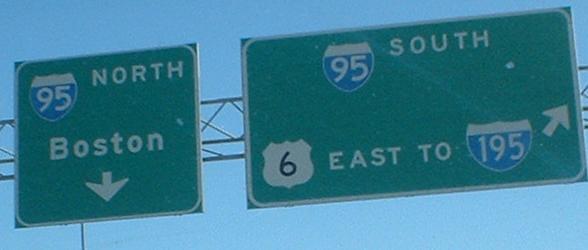
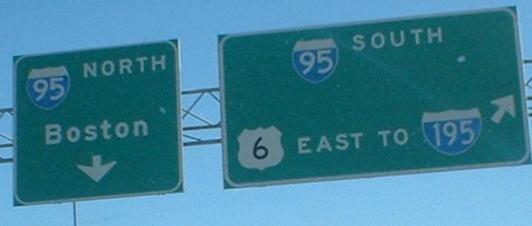
“Mr. Walmsley, this is State Trooper Richards. I’m calling to let you know that your wife has been in an accident on Route 95. She’s conscious and responding to questions. She’s in route to Rhode Island Hospital right now.”

A more-than-pregnant pause as I fight through the knot in my throat, “But she’s ok?” I asked.

“Yes, sir, she’s ok. But I want you to know that it was a very serious accident. Your wife is a lucky woman.”

More fighting with the knot.

“Thank you. I’m on my way.”

Our oldest son, Samuel, was in the shower. I told him that Mom had been in an accident, but she was ok. I told him that I had to go to the hospital and that I’d be home when he got off the bus. I did the same with our son, Will.

When I arrived at the hospital, they escorted me to her. I wasn’t sure what I would be walking into. She looked great. Sure, there was the expected neck brace, a temporary cast around her leg and foot, and the standard-issue IV, but she looked great. I worked around her tubes and braces and casts to give her a hug. I blinked my way through the tears, and we talked a little bit. We spent the morning together. I gave her water from a little sponge on the end of a stick. When she napped, I called the essential family, friends, and co-workers. I called the insurance company and got that ball rolling.

The doctors reiterated that Stasia was a very lucky woman. She had some fractures, some internal bleeding, and they were monitoring her spleen, but she was a lucky woman. I kept hearing this, but there was a disconnect between the words and my brain. She had called me on the phone. Everything was ok. It couldn’t have been that bad, could it?


There was blood and glass all over…


Around noon, I felt secure enough about her condition to leave Stasia’s side. I took a ride to where they towed the car. I wanted to gather whatever belongings I could from the car. As I pulled up alongside the lot, I spotted the car. Suddenly, everything went a little blurry and the magnitude of it all hit me. The little blue Ford Focus was virtually unrecognizable. My brain and the words “she’s a lucky woman” sure made a connection now. How did she walk away from this? How could anyone walk away from this? I found one door that would still open. Amidst the rubble I found some notes that I would periodically leave on her steering wheel. I found a shattered CD (a “mix-tape” if you will) that I had made for her. I picked the shards of glass out of one of her favorite sweatshirts.

I went back to my car and sat there for a minute. I needed to hear her voice, to make sure that seeing her at the hospital that morning wasn’t just a dream. I needed to hear her voice to make sure that she really did walk away from that heap of metal that I just saw. I called her hospital room. When she answered I couldn’t really get any words out, but at least I knew she was ok.


As the rain tumbled down hard and cold

I seen a young man lying by the side of the road

He cried Mister, won’t you help me please…


As Stasia recovered, she talked more about the accident. She talked about the people who stopped to help her. She talked about how important they were. These were not cops or EMTs; they were just regular folks on the way to their own daily grind. They didn’t have to stop and help, they could have just driven on by. When I listen to Springsteen’s “Wreck On The Highway” now, I always think about the people who helped my wife as she scrambled to get out of an overturned car in the middle of a busy highway, not sure if she was about to be obliterated by an 18-wheeler. I saw what that car looked like and these people could not have had a good feeling as they approached to help. But they helped anyway. They helped her out of the car, they helped calm her down, and they helped call an ambulance—all because they came upon a wreck and knew they had to help.

In this ever-connected world of the Internet and social media, I wonder if somehow, someday, one of those people who helped Stasia stumbles upon this blog. Just in case they do, I want to say thank you. Thank you for helping my wife when I couldn’t. Thank you for giving her a reason to believe. Thank you for not just driving by.


Sometimes I sit up in the darkness

And I watch my baby as she sleeps

Then I climb in bed and I hold her tight

I just lay there awake in the middle of the night

Thinking ’bout the wreck on the highway….


The first few nights after she came home were tough. Sleep was not easy, and would come sporadically. But when she was asleep, just like the narrator in “Wreck On The Highway,” I would just watch her. And I’d think about everything that had happened. I’d think about how thankful I was that the State Trooper called me on the phone as opposed to knocking on my door bearing much worse news. I’d think about seeing the car, and about how right everyone was when they said she was lucky. I would think about these things while I watched her sleep.

My wife is lucky. But she is also something else: fiercely strong. This accident took the strongest woman I know and made her stronger. She rehabbed like a champion. From the early days of making wine-cork wreaths and crocheting scarfs and hats to lift her spirits when she was couch-bound, to the latter days of building up strength through exercise and physical therapy, she persevered. She made goals and worked toward them. One of those goals is to finish the New York City Marathon, which she is running on Sunday November 2 (you can follow along with her training at the best blog on the Internet www.26point2before40.com).

When she crosses the finish line in Central Park in November, I will no doubt think of the phone call that morning from the unknown number. And I will think of the kindness of strangers, who, like the narrator in “Wreck On The Highway,” refused to drive past. And I will think of this song and what it now means to me. And I will be so proud of my hero.

UPDATE: Exactly one year ago today, on November 2nd, 2014, my wife finished the New York City Marathon. In biting cold and brutal winds (race officials moved the start of the wheelchair competition from the Verrazano-Narrows Bridge in Staten Island to Brooklyn for fear the athletes would be blown over by the winds), she navigated her way through all five boroughs leaving the likes of Terri Hatcher and Tiki Barber in her wake.

Along with a traveling circus of family members and supporters all clad in bright orange sweatshirts, we were able to see Stasia three times along the route: once in Brooklyn and twice in Manhattan. We held our homemade signs high and proud, and we supplied her with some energy chews to munch on. She looked strong. Most of all, though, she looked happy. Can you imagine being happy while running 26.2 miles?

After the race, I thought about the morning of the accident. I thought about the kindness of strangers. I thought about the song Wreck On The Highway. I thought about how far she had come: from crutches and physical therapy, to long training runs in the heat of August and even longer runs when the weather got cold and dark. Through it all, she remained determined.

One year ago today, all that hard work and determination paid off on a blustery day in Central Park. And I’m reminded of how after the accident, when reflecting on what could have been, Stasia wrote about why she runs. Her answer? “I run because I almost couldn’t.”

My hero.

“Wreck On The Highway” is the closing track to Bruce Springsteen’s 1980 double-album The River.
If I Should Fall Behind (1992)

276916155tgFICj_fs

If as we are walking, a hand should slip free…

I’ll wait for you, and should I fall behind wait for me.

“If I Should Fall Behind” is a love song in the truest sense of the words. It is real. A great love song shouldn’t be filled with rainbows and butterflies because love is not filled with rainbows and butterflies. Amidst the light there is always an underpinning of darkness. Within the glorious ecstasy of love there is always a layer of fear, danger, and worry. If those fears get to you first, I promise I’ll wait for you. If those fears get to me, I know you’ll wait for me. Because that’s what real love is.

But each lover’s steps fall, so differently…

But I’ll wait for you, and should I fall behind wait for me.

No matter how much you have in common with your partner, your steps are not always going to fall together. You’re going to have differences. They can range from petty silliness (arguing over what movie to stream or what food truck to hit) to epic struggles (the decision to have children or where to buy a home). But we know that as our steps take us in different directions, the paths we forge lead us to the same spot—where your hand will rejoin mine, clasped together again.

Now everyone dreams of a love lasting and true…

But you and I know what this world can do.

This world can close in on you very quickly. When we fall in love, we are filled with promise. The promise of a million tingles running up our arms. The promise of an iced tea on the front porch with our 2.5 children running through the sprinkler as they laugh with an innocence that as adults we lost long ago. But the world can put the most ardent strain on the best of promises. The tingles go away when you can’t make the mortgage payment. The tingles go away when your car breaks down on the side of the Route 95 leaving you alone in a smoky haze of humiliation. The world tests you every day. Is your love strong enough? Will you wait for me? Will I wait for you?

Should we lose each other, in the shadow of the evening trees…

I’ll wait for you, and should I fall behind wait for me.

True love makes a promise to its possessors. The promise that if you fight through the dark times, that if you withstand the shadows that this world casts upon you, you will be given the greatest of payoffs. Your reward is a life spent with the one person who is your true companion and your kindred spirit. Who will always wait for you, no matter how far behind you fall.


“If I Should Fall Behind” is the fourth track on Bruce Springsteen’s 1992 album Lucky Town.

Thunder Road (1975)

6_1_p_divided-highway


The screen door slams, Mary’s dress waves

Like a vision she dances across the porch as the radio plays.

To borrow a line from Prince, dig if you will a picture… a young girl, new-love’s smile on her face as she sashays onto her rickety front porch. As the door slams behind her, we hear Roy Orbison’s tranquilizing voice telling us how only the lonely know how he feels. The sun is ablaze and there is a slight, sweet breeze that induces a gentle wave on the girl’s dress. From the dreamy smile on her face we see that she is happy, though perhaps a bit nervous, for what lies ahead. This is the opening scene to our movie.

“Thunder Road” is as cinematic a piece of songwriting as there is in the Springsteen canon- perhaps the rock and roll canon. This is a movie about love, cars, youth, faith, and beauty. This is a movie about courage, fear, escape, pain, and redemption. This is a movie about release, about finding a way out and taking it no matter the risks or the costs. When you drive down “Thunder Road,” you’re not entirely sure where it leads, but you know it’s better than where you came from.

Don’t run back inside darling you know just what I’m here for

So you’re scared and you’re thinking that maybe we ain’t that young anymore

Show a little faith there’s magic in the night, you ain’t a beauty but hey, you’re alright

Oh, and that’s alright with me.

Any kind of escape starts with the notion of faith. Faith in yourself, faith in your dreams, faith in your decisions. It’s very easy for Mary to run back inside, to give into to her fear of the unknown. As they say, the devil you know… But her young friend’s faith never wavers. There is magic in the night and we are going to ride that magic all the way to the Promised Land, just you and me.

Hey what else can we do now except roll down the windows and let the wind blow back your hair

Well the night’s busting open these two lanes can take us anywhere.

American cinema has been filled with movies about the open road. From “Easy Rider” to “Thelma and Louise,” there is something liberating about the wind in your hair as you speed to a new and unknown destination. Our daring young actor is doing everything in his power to get Mary to leave behind this tired town and take a chance on their new found love. Surely there’s more to this world than this old, decrepit front porch that’s a rusty nail away from collapsing in a heap of broken dreams. The night is not just open to us, it is busting open and with these two lanes of concrete we can go anywhere in the world. All she has to do is just take his hand.

And my car’s out back if you’re ready to take that long walk

From your front porch to my front seat, the door’s open but the ride ain’t free.

The ride is never free. There is going to be a cost. Our young lovers may struggle, they may run out of money, hell, they might even doubt their love at times. But is that enough to not give it a try? You’re only young once and there is an entire world of possibilities ahead of you. We see him pleading, “How long are you going to let this world kick you around like a dog before you take a chance- a chance on me, a chance on love, a chance on us? My car’s right out back, the door is open, all you gotta do is hop in.”

So Mary climb in

It’s a town full of losers, and I’m pulling out of here to win.

The opening scene to our movie ends here. You decide where you want to take it. Bruce Springsteen once described “Thunder Road” as “an invitation.” I invite you to write the rest of the script. Does Mary run back inside to what is familiar? Do the far-reaching tentacles of this town full of losers snatch another victim? Or does she take that long walk to his front seat and embark on a cross-country exploration of the soul? The camera zooms in on our leading man. In the background is a car, passenger door ajar. His hand is outstretched. “Show a little faith Mary, there’s magic in the night.” Fade to black. The rest is up to you.


“Thunder Road” is the opening track (an invitation, if you will) on Bruce Springsteen’s 1975 album Born To Run.

Born In The U.S.A. (1984)

Homeless02

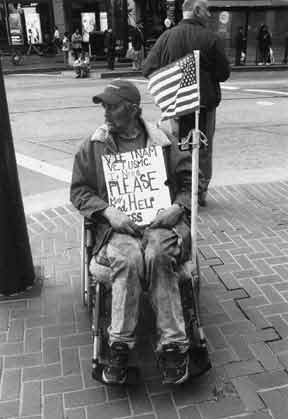
I used to visit the Veterans Affairs Medical Center in Providence, RI, a lot as a kid. My grandfather was in and out of the VA throughout a good portion of my childhood. I hated it. There was a cold sterility to the building that made me feel like I just wanted to throw myself out of the nearest window. Picture the Cowardly Lion running down that long hallway in Oz- except I didn’t have the courage. I stayed, made the obligatory trek up to whatever floor my grandfather was on, then waited back in the lobby while my mother finished up whatever she needed to do (calming down my grandmother, filling out endless paperwork).

I was at the VA quite a bit in the summer of 1984. On more than one occasion, I’m sure I walked out of the hospital doors and heard “Born In The U.S.A.” blaring from a car window. The song was ubiquitous that year. You heard it at the beach and in backyards and in the city. Even Ronald Reagan was playing it at his re-election campaign stops (though I’m guessing he either never listened closely to the lyrics or one of his campaign staffers was playing a cruel joke him).

The opening synthesizer riff along with those heavy drums made you pay attention; it required that you pay attention. Before the first word was sung you knew this was something big. But beneath the drums and keyboards and that jingoistic chorus lies a darker American story, a story whose true meaning ironically escaped my pre-teen mind as I walked out of that hospital.

To be born in the U.S.A. means many different things. It means you’re born into the results of an amazing experiment in democracy. It means you’re born into a country where the possibilities are truly endless, where with the right combination of talent, drive, opportunity, and a little bit of luck, you can do anything. But there are costs to being born in the U.S.A. as well. It is not always that shining house on the hill that our forefathers envisioned. One example of this is the way we treat our veterans when they return to civilian life. Our men and women of the military are asked to make the ultimate sacrifice. They are sent into jungles to fight unseen enemies. They are sent into deserts where the line between enemy and civilian is so blurred they don’t know who to trust. And when the blood dries and the dust clears and they make it home, sometimes that’s when the real battle starts.

Came back home to the refinery, hiring man says “Son, if it were up to me”…

Went down to see my V.A. man, he said “Son, don’t you understand”…

I think of this song every time I pass a homeless veteran holding his “will work for food” sign by the side of the highway exit ramp. It’s hard to assimilate back into normal life after what these soldiers have seen and done. Their veteran’s benefits run out, they can’t find a job, and everything spirals downward. What I believe Springsteen is asking in this song is how did we get to a place where we can’t support the very people who put their lives on the line for us?

I’m ten years burning down the road

Nowhere to run, ain’t got nowhere to go…

It’s now 30 years burning down that road. 30 years since “Born In The U.S.A.” hit the airwaves and 30 years since I’ve been in that VA hospital. I still drive by it a lot. 30 years later I wonder if it still has those non-descript, lifeless white walls. I hope that it’s warmed up a little bit, that it doesn’t feel quite as indistinct. Then I think of the problems at the Walter Reed Medical Center during the Iraq War, I think of the recent problems with VA hospitals across the country, and my hope dwindles.

Independence Day, July 4th, is only a day away. When the last burger has been flipped, and the last firework has gone off, sit back and put “Born In The U.S.A.” on your stereo. But try to find the bluesy, unplugged version that Bruce does. It’s on the Tracks compilation that was released in the late 90’s. Or go find it on You Tube. In this version, the pomp and circumstance of the album version are stripped away, and the lyrics take center stage. And when Monday rolls around, and you’re back to your daily routine, go buy a sandwich and give it to the guy on the corner with the “homeless veteran” sign around his neck. Or give $10 to the Disabled American Veterans organization. Because being “Born In The U.S.A.” is supposed to mean being born into a brotherhood and a sisterhood. And in that brother and sisterhood, we take care of our own.

To donate to the Disabled American Veterans Charity go to http://www.dav.org

“Born In The U.S.A.” is the title track from Bruce Springsteen’s 1984 album of the same name.

Jungleland (1975)

Exxon-MID11

Cue Soozie and Roy…

I’ll never forget the first time I heard “Jungleland” live. It was about two hours into a typically energetic Boston Garden Bruce set when things got quiet. Then Soozie’s violin and Roy’s piano promised that something special was about to go down. Close to 20,000 members of the E Street family were about to embark on a twelve-minute odyssey down Flamingo Lane. We were going to ride with the Magic Rat in his sleek machine like some lost outtake from “Midnight Cowboy.” We were going to drink warm beer in the soft summer rain. We were all going to meet beneath that giant Exxon sign (or, being in Beantown, maybe we could make it a Citgo sign for the night). Twenty-thousand disciples were waiting for our fearless leader to tell us where he was going to transport us next. We dodged cops, we flashed guitars just like switch-blades, and we hustled for the record machine. We dressed in the latest rage, but we also struggled in dark corners. We were on a ride like no other.

Down in Jungleland…

It is a truly unique and communal experience to sing those three words. Look to your right: three guys in their mid-fifties, salt-and-pepper hair, arm-in-arm, swaying back and forth. Look to your left: a young girl, maybe 14, with Taylor Swift lip-stick and skinny jeans, singing every word like it was the latest Pitbull hit. Look in front of you at the preppy college kid in the Abercrombie shirt and the Northeastern hat, just taking it all in. For three words, we are all one. Singing at the top of our lungs so that the entire world will know exactly where this epic saga is taking place: Down in Jungleland. Jungleland is not a place for the meek of heart. It is dark, and it is formidable, and it is daunting. But more than anything it is alive. And for the first four minutes of “Jungleland,” we think we couldn’t possibly be more alive than we are at that moment.

Cue the Big Man…

Enter Clarence. Larger than life, even from 50 rows away. I’ve listened to the sax solo from “Jungleland” countless times. I’ve listened to it in my ’83 Ford Escort with a bungee cord holding the door closed. I’ve listened to it while mowing my lawn in 95-degree heat. I’ve listened to it in the shower. But up until that moment I had never heard it live. It is surreal. I was taken somewhere I didn’t know I could go. It filled the entire arena until there was no space left to even breathe. Twenty-thousand people in hushed reverence, all in awe of the Big Man. And when he finished and stepped back into the shadows, I felt exhausted, like I had somehow had a part in what just occurred. In a way I think I did; I think we all did. I’d like to think the audience was some kind of medium between Clarence and the Gods of Music.

Cue the Boss…

As the last note of the saxophone rings through the arena, the Big Man somehow fades into the canvas that is the E Street Band. As Bruce steps up to the microphone, we all know our adventure with the Magic Rat is coming to a close. But even after we watch the Rat get gunned down by his own dreams, and after the girl shuts off that bedroom light, one more thrill awaits. That cry. That furious wail that comes from the most remote depths of Bruce Springsteen. It’s the culmination of this twelve minute movie we’ve all just watched–no, acted–in. Everything we’ve seen and witnessed, in the darkest depths of the city, comes forth in the most guttural way. It’s a cry that carries away everyone in that arena. Where you go is up to you. Maybe you just want to drink beer on the hood of a Dodge. Maybe you want to race across that Jersey state line straight into the heart of darkness. Or maybe you want to go beneath the city, where the unspeakable awaits. But that’s Jungleland, right? Choose your path.

POST-SCRIPT:

Cue Jake…

Fast-forward to Gillette Stadium, Foxboro, Massachusetts, on August 18, 2012. The first time I heard “Jungleland” live since the tragic passing of Clarence Anicholas Clemons, Jr. From all accounts, this was only the second time the band had played this song post-Big Man. Many heads were turning as Soozie and Roy started their two-person symphony. Really? Could we be this lucky? We knew Jake Clemons had chops, but was he ready for this? His Uncle’s signature piece? Four minutes into the song we all found out. Jake delivered a gorgeous, soaring solo that would have brought out Clarence’s huge and beautiful smile. Perhaps the best part was watching Jake’s boss during the performance. He was so proud.

“Jungleland” is the final track  on Bruce Springsteen’s 1975 album “Born To Run”.