Dancing In The Dark (1984)

imagesCAJ4W7KA

“Dancing In The Dark” is a four minute circus sung by the saddest clown in the show. If you listen to the song sans vocals, perhaps on some dollar-store karaoke CD, you have a classic 80’s synth-pop carnival of keyboard sounds and drum tracks. It’s inherently danceable, and if you’re not one for tripping the light fantastic you at least have to bop your head a little. It’s something you might hear while looking for your seat at the latest incarnation of P.T. Barnum’s traveling collection of acrobats, elephants, and clowns. But every circus has its sad clown.

I get up in the evening, and I ain’t got nothing to say. I come home in the morning, and go to bed feeling the same way…

Send in the clown. The narrator in “Dancing In The Dark” finds himself in a rut the size of a Providence pot hole. There is monotony in his life that he just can’t escape. When you are an entertainer, be it a rock star or a circus clown, you keep strange hours. You get up in the evening and go to bed in the morning. And you do it all again the next day. The cycle gets more and more vicious with each show, each city, and each tour.

Hey there baby, I could use just a little help…

If nothing else, “Dancing In The Dark” is a plea for help. He’s tired. He’s tired and bored with himself. As the carnival music continues to provide the happy backdrop, the story is getting darker and the clown is getting sadder, desperate even.

I check my look in the mirror; wanna change my clothes, my hair, my face…

A common thread in a great Springsteen lyric is the listener’s ability to relate to it. Who hasn’t had moments like this? Every piece of clothing in my closet is shit. My hair is an unmanageable mess of grays and snarls and frizz that Jennifer Aniston’s stylist couldn’t even raise to respectability. My face? There is a zit on my lower left jawline that you could safely land Apollo 11 on. I want to change everything in my life. Yesterday. Just as we still somehow make it to work every day despite our self-loathing, our clown trudges on as well. As the music keeps reminding us, this is the greatest show on Earth. It waits for no one.

There’s something happening somewhere, baby I just know there is…

Be it “Rosalita,” “Thunder Road,” or “The Promised Land,” there is always something to keep fighting for in a Springsteen song. Bruce is not going to allow his characters to pack it in and quit because that would somehow convey to the audience that there’s nothing left to fight for. So we drive the same damn commute we’ve driven for the last 20 years. We sit through our fifth Little League game in three days. We fix the same fucking screen door that we fixed last month. Because we know that there must be something more out there; something wild and exiting and adventurous. The great payoff is waiting for us, I just know it is.

You can’t start a fire, you can’t start a fire without a spark…

So the sad clown puts on his giant red shoes and his giant red nose and his giant red wig. He paints a giant frown on his already sad face. And through it all he hopes. He hopes that tonight, the fortieth show in the last forty-five days, he’ll find the spark. The spark that will start a life-changing inferno that will leave behind a trail of bad clothes, bad hair, and mountainous jaw zits. So the next time you see a clown pull the trigger on one of those toy guns that shoots the “bang” sign, know that he just might be for hire, even if it seems like we’re all just dancing in the dark.


“Dancing In The Dark” appeared on Bruce Springsteen’s 1984 album Born In The U.S.A.
Highway Patrolman (1982)

tailights

I got a brother named Frankie, and Frankie ain’t no good…

Bruce Springsteen has a unique way of crafting characters that his audience can relate to. Most of us will never jam with Ziggy Stardust, or witness Darling Nikki’s stimulating use of a Newsweek, or uncover Lola’s hidden secret. But we all know Joe Roberts. He’s a local boy turned cop, never straying too far from the house he grew up in; a hometown hero in every cliché sense of the term. He was groomed to serve and protect the fine, upstanding folks of Perrineville, Ohio. But we also all know Frankie. And Frankie ain’t no good.

Well if it was any other man, I’d put him straight away…

“Highway Patrolman” takes the bonds of family and stretches them to the very brink of snapping. How strong are those bonds? At what point do you break those bonds for the good of society? For the safety and well-being of your beloved hometown? The song is a fascinating look at the struggle between doing right by your job and doing right by your own blood.

Although Springsteen tells us that the brothers have had their differences since childhood (“Ever since we was young kids, it’s been the same come down”), it wasn’t always a tension-filled relationship. In fact, the chorus paints a wonderful portrait of the “good old days.” It’s easy to see the two brothers belly-laughing over a table of empty Budweisers, flipping a coin to see who gets to dance with Maria next. There’s a foundation there; a history between the two that makes it so difficult for Joe to ever bust Frankie. But all foundations have cracks.

Well, Frankie went in the army back in 1965. I got a farm deferment, settled down, took Maria for my wife…

Guilt plays a large part in many Springsteen compositions, and “Highway Patrolman” is no exception. Frankie heads off to Vietnam while Joe gets a deferment to stay and work on the farm. As if knowing that your brother is fighting in a jungle on the other side of the world is not guilt enough, we see that Joe has married Maria. The very same Maria that they used to take turns dancing with. When the wheat prices plummet, Joe sells the farm and takes the job as a police officer just in time for Frankie’s return. Frankie’s rebellious streak has been exacerbated by what he was forced to see and do in that jungle, and now he returns to find that his brother is the “local hero” married to Frankie’s old dance partner. How far will the bonds of family stretch?

Man turns his back on his family, he ain’t no friend of mine…

The final verse is one of the more heart-wrenching verses of the Springsteen catalog. Frankie may have finally gone too far. “There’s a kid looking bad, bleeding hard from his head. There was a girl crying at a table, it was Frank they said.” Joe hits the lights in his cruiser and takes off in pursuit. One of Springsteen’s greatest strengths is his sparseness. He always gives the listener room for their own interpretation of what is happening. I always wonder what is going through Joe’s head during that pursuit. Is a young man dead because I continually looked the other way? Is Frankie the way he is because of me? Because I didn’t go to Vietnam? Because I married Maria? All of it falls on Joe’s shoulders at this moment.

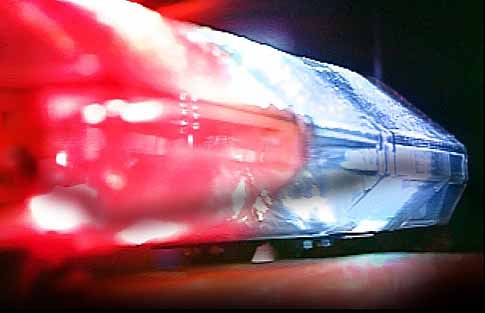
’til a sign said ‘Canadian border five miles from here.’ I pulled over to the side of the highway, watched his tail-lights disappear…

There is finality here. Joe has let Frankie go one last time. If the kid back at the roadhouse is as bad off as Frankie thinks he is, he knows he can’t come back. Joe knows this, too. I’m not gonna arrest ya brother, but I’m done helping ya. As Joe Roberts pulls to the side of the road, a flood of emotions pull to the side of the road with him. Sadness, guilt, relief, love, duty. How far do the bonds of family stretch? Right about to the Canadian border.


“Highway Patrolman” appeared on Bruce Springsteen’s album Nebraska, released in 1982. The screenplay to Sean Penn’s directorial debut, The Indian Runner, is based on this song.