If I Should Fall Behind (1992)

276916155tgFICj_fs

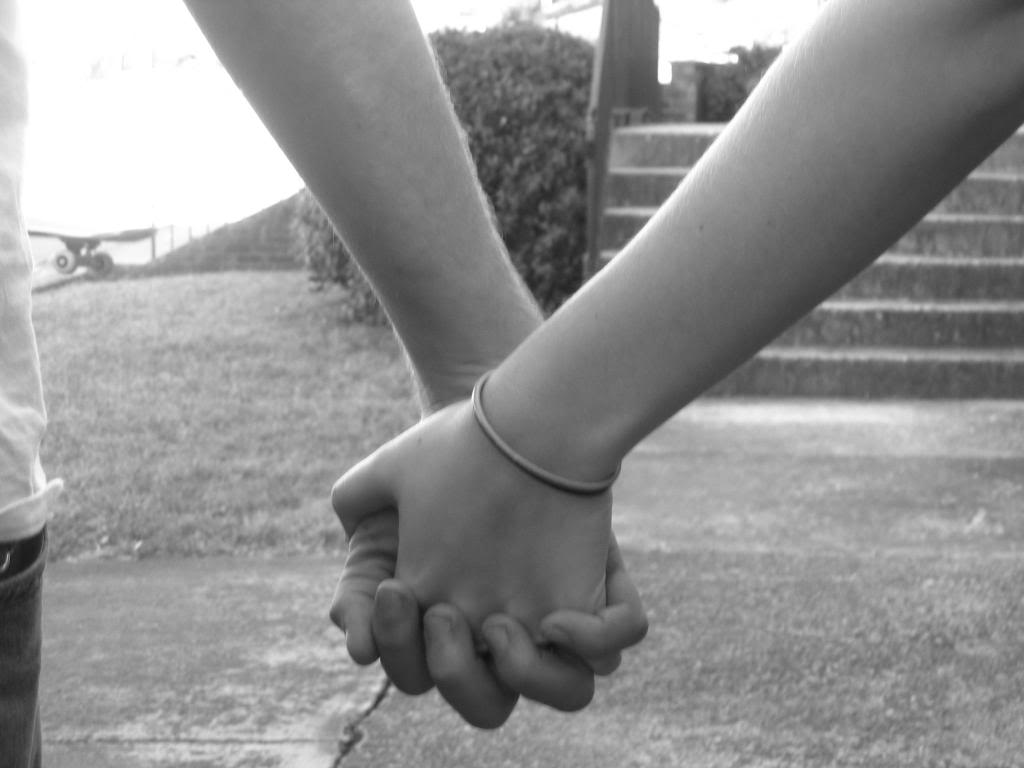
If as we are walking, a hand should slip free…

I’ll wait for you, and should I fall behind wait for me.

“If I Should Fall Behind” is a love song in the truest sense of the words. It is real. A great love song shouldn’t be filled with rainbows and butterflies because love is not filled with rainbows and butterflies. Amidst the light there is always an underpinning of darkness. Within the glorious ecstasy of love there is always a layer of fear, danger, and worry. If those fears get to you first, I promise I’ll wait for you. If those fears get to me, I know you’ll wait for me. Because that’s what real love is.

But each lover’s steps fall, so differently…

But I’ll wait for you, and should I fall behind wait for me.

No matter how much you have in common with your partner, your steps are not always going to fall together. You’re going to have differences. They can range from petty silliness (arguing over what movie to stream or what food truck to hit) to epic struggles (the decision to have children or where to buy a home). But we know that as our steps take us in different directions, the paths we forge lead us to the same spot—where your hand will rejoin mine, clasped together again.

Now everyone dreams of a love lasting and true…

But you and I know what this world can do.

This world can close in on you very quickly. When we fall in love, we are filled with promise. The promise of a million tingles running up our arms. The promise of an iced tea on the front porch with our 2.5 children running through the sprinkler as they laugh with an innocence that as adults we lost long ago. But the world can put the most ardent strain on the best of promises. The tingles go away when you can’t make the mortgage payment. The tingles go away when your car breaks down on the side of the Route 95 leaving you alone in a smoky haze of humiliation. The world tests you every day. Is your love strong enough? Will you wait for me? Will I wait for you?

Should we lose each other, in the shadow of the evening trees…

I’ll wait for you, and should I fall behind wait for me.

True love makes a promise to its possessors. The promise that if you fight through the dark times, that if you withstand the shadows that this world casts upon you, you will be given the greatest of payoffs. Your reward is a life spent with the one person who is your true companion and your kindred spirit. Who will always wait for you, no matter how far behind you fall.


“If I Should Fall Behind” is the fourth track on Bruce Springsteen’s 1992 album Lucky Town.

Thunder Road (1975)

6_1_p_divided-highway


The screen door slams, Mary’s dress waves

Like a vision she dances across the porch as the radio plays.

To borrow a line from Prince, dig if you will a picture… a young girl, new-love’s smile on her face as she sashays onto her rickety front porch. As the door slams behind her, we hear Roy Orbison’s tranquilizing voice telling us how only the lonely know how he feels. The sun is ablaze and there is a slight, sweet breeze that induces a gentle wave on the girl’s dress. From the dreamy smile on her face we see that she is happy, though perhaps a bit nervous, for what lies ahead. This is the opening scene to our movie.

“Thunder Road” is as cinematic a piece of songwriting as there is in the Springsteen canon- perhaps the rock and roll canon. This is a movie about love, cars, youth, faith, and beauty. This is a movie about courage, fear, escape, pain, and redemption. This is a movie about release, about finding a way out and taking it no matter the risks or the costs. When you drive down “Thunder Road,” you’re not entirely sure where it leads, but you know it’s better than where you came from.

Don’t run back inside darling you know just what I’m here for

So you’re scared and you’re thinking that maybe we ain’t that young anymore

Show a little faith there’s magic in the night, you ain’t a beauty but hey, you’re alright

Oh, and that’s alright with me.

Any kind of escape starts with the notion of faith. Faith in yourself, faith in your dreams, faith in your decisions. It’s very easy for Mary to run back inside, to give into to her fear of the unknown. As they say, the devil you know… But her young friend’s faith never wavers. There is magic in the night and we are going to ride that magic all the way to the Promised Land, just you and me.

Hey what else can we do now except roll down the windows and let the wind blow back your hair

Well the night’s busting open these two lanes can take us anywhere.

American cinema has been filled with movies about the open road. From “Easy Rider” to “Thelma and Louise,” there is something liberating about the wind in your hair as you speed to a new and unknown destination. Our daring young actor is doing everything in his power to get Mary to leave behind this tired town and take a chance on their new found love. Surely there’s more to this world than this old, decrepit front porch that’s a rusty nail away from collapsing in a heap of broken dreams. The night is not just open to us, it is busting open and with these two lanes of concrete we can go anywhere in the world. All she has to do is just take his hand.

And my car’s out back if you’re ready to take that long walk

From your front porch to my front seat, the door’s open but the ride ain’t free.

The ride is never free. There is going to be a cost. Our young lovers may struggle, they may run out of money, hell, they might even doubt their love at times. But is that enough to not give it a try? You’re only young once and there is an entire world of possibilities ahead of you. We see him pleading, “How long are you going to let this world kick you around like a dog before you take a chance- a chance on me, a chance on love, a chance on us? My car’s right out back, the door is open, all you gotta do is hop in.”

So Mary climb in

It’s a town full of losers, and I’m pulling out of here to win.

The opening scene to our movie ends here. You decide where you want to take it. Bruce Springsteen once described “Thunder Road” as “an invitation.” I invite you to write the rest of the script. Does Mary run back inside to what is familiar? Do the far-reaching tentacles of this town full of losers snatch another victim? Or does she take that long walk to his front seat and embark on a cross-country exploration of the soul? The camera zooms in on our leading man. In the background is a car, passenger door ajar. His hand is outstretched. “Show a little faith Mary, there’s magic in the night.” Fade to black. The rest is up to you.


“Thunder Road” is the opening track (an invitation, if you will) on Bruce Springsteen’s 1975 album Born To Run.

Dancing In The Dark (1984)

imagesCAJ4W7KA

“Dancing In The Dark” is a four minute circus sung by the saddest clown in the show. If you listen to the song sans vocals, perhaps on some dollar-store karaoke CD, you have a classic 80’s synth-pop carnival of keyboard sounds and drum tracks. It’s inherently danceable, and if you’re not one for tripping the light fantastic you at least have to bop your head a little. It’s something you might hear while looking for your seat at the latest incarnation of P.T. Barnum’s traveling collection of acrobats, elephants, and clowns. But every circus has its sad clown.

I get up in the evening, and I ain’t got nothing to say. I come home in the morning, and go to bed feeling the same way…

Send in the clown. The narrator in “Dancing In The Dark” finds himself in a rut the size of a Providence pot hole. There is monotony in his life that he just can’t escape. When you are an entertainer, be it a rock star or a circus clown, you keep strange hours. You get up in the evening and go to bed in the morning. And you do it all again the next day. The cycle gets more and more vicious with each show, each city, and each tour.

Hey there baby, I could use just a little help…

If nothing else, “Dancing In The Dark” is a plea for help. He’s tired. He’s tired and bored with himself. As the carnival music continues to provide the happy backdrop, the story is getting darker and the clown is getting sadder, desperate even.

I check my look in the mirror; wanna change my clothes, my hair, my face…

A common thread in a great Springsteen lyric is the listener’s ability to relate to it. Who hasn’t had moments like this? Every piece of clothing in my closet is shit. My hair is an unmanageable mess of grays and snarls and frizz that Jennifer Aniston’s stylist couldn’t even raise to respectability. My face? There is a zit on my lower left jawline that you could safely land Apollo 11 on. I want to change everything in my life. Yesterday. Just as we still somehow make it to work every day despite our self-loathing, our clown trudges on as well. As the music keeps reminding us, this is the greatest show on Earth. It waits for no one.

There’s something happening somewhere, baby I just know there is…

Be it “Rosalita,” “Thunder Road,” or “The Promised Land,” there is always something to keep fighting for in a Springsteen song. Bruce is not going to allow his characters to pack it in and quit because that would somehow convey to the audience that there’s nothing left to fight for. So we drive the same damn commute we’ve driven for the last 20 years. We sit through our fifth Little League game in three days. We fix the same fucking screen door that we fixed last month. Because we know that there must be something more out there; something wild and exiting and adventurous. The great payoff is waiting for us, I just know it is.

You can’t start a fire, you can’t start a fire without a spark…

So the sad clown puts on his giant red shoes and his giant red nose and his giant red wig. He paints a giant frown on his already sad face. And through it all he hopes. He hopes that tonight, the fortieth show in the last forty-five days, he’ll find the spark. The spark that will start a life-changing inferno that will leave behind a trail of bad clothes, bad hair, and mountainous jaw zits. So the next time you see a clown pull the trigger on one of those toy guns that shoots the “bang” sign, know that he just might be for hire, even if it seems like we’re all just dancing in the dark.


“Dancing In The Dark” appeared on Bruce Springsteen’s 1984 album Born In The U.S.A.

Highway Patrolman (1982)

tailights

I got a brother named Frankie, and Frankie ain’t no good…

Bruce Springsteen has a unique way of crafting characters that his audience can relate to. Most of us will never jam with Ziggy Stardust, or witness Darling Nikki’s stimulating use of a Newsweek, or uncover Lola’s hidden secret. But we all know Joe Roberts. He’s a local boy turned cop, never straying too far from the house he grew up in; a hometown hero in every cliché sense of the term. He was groomed to serve and protect the fine, upstanding folks of Perrineville, Ohio. But we also all know Frankie. And Frankie ain’t no good.

Well if it was any other man, I’d put him straight away…

“Highway Patrolman” takes the bonds of family and stretches them to the very brink of snapping. How strong are those bonds? At what point do you break those bonds for the good of society? For the safety and well-being of your beloved hometown? The song is a fascinating look at the struggle between doing right by your job and doing right by your own blood.

Although Springsteen tells us that the brothers have had their differences since childhood (“Ever since we was young kids, it’s been the same come down”), it wasn’t always a tension-filled relationship. In fact, the chorus paints a wonderful portrait of the “good old days.” It’s easy to see the two brothers belly-laughing over a table of empty Budweisers, flipping a coin to see who gets to dance with Maria next. There’s a foundation there; a history between the two that makes it so difficult for Joe to ever bust Frankie. But all foundations have cracks.

Well, Frankie went in the army back in 1965. I got a farm deferment, settled down, took Maria for my wife…

Guilt plays a large part in many Springsteen compositions, and “Highway Patrolman” is no exception. Frankie heads off to Vietnam while Joe gets a deferment to stay and work on the farm. As if knowing that your brother is fighting in a jungle on the other side of the world is not guilt enough, we see that Joe has married Maria. The very same Maria that they used to take turns dancing with. When the wheat prices plummet, Joe sells the farm and takes the job as a police officer just in time for Frankie’s return. Frankie’s rebellious streak has been exacerbated by what he was forced to see and do in that jungle, and now he returns to find that his brother is the “local hero” married to Frankie’s old dance partner. How far will the bonds of family stretch?

Man turns his back on his family, he ain’t no friend of mine…

The final verse is one of the more heart-wrenching verses of the Springsteen catalog. Frankie may have finally gone too far. “There’s a kid looking bad, bleeding hard from his head. There was a girl crying at a table, it was Frank they said.” Joe hits the lights in his cruiser and takes off in pursuit. One of Springsteen’s greatest strengths is his sparseness. He always gives the listener room for their own interpretation of what is happening. I always wonder what is going through Joe’s head during that pursuit. Is a young man dead because I continually looked the other way? Is Frankie the way he is because of me? Because I didn’t go to Vietnam? Because I married Maria? All of it falls on Joe’s shoulders at this moment.

’til a sign said ‘Canadian border five miles from here.’ I pulled over to the side of the highway, watched his tail-lights disappear…

There is finality here. Joe has let Frankie go one last time. If the kid back at the roadhouse is as bad off as Frankie thinks he is, he knows he can’t come back. Joe knows this, too. I’m not gonna arrest ya brother, but I’m done helping ya. As Joe Roberts pulls to the side of the road, a flood of emotions pull to the side of the road with him. Sadness, guilt, relief, love, duty. How far do the bonds of family stretch? Right about to the Canadian border.


“Highway Patrolman” appeared on Bruce Springsteen’s album Nebraska, released in 1982. The screenplay to Sean Penn’s directorial debut, The Indian Runner, is based on this song.