Thunder Road (1975)

6_1_p_divided-highway


The screen door slams, Mary’s dress waves

Like a vision she dances across the porch as the radio plays.

To borrow a line from Prince, dig if you will a picture… a young girl, new-love’s smile on her face as she sashays onto her rickety front porch. As the door slams behind her, we hear Roy Orbison’s tranquilizing voice telling us how only the lonely know how he feels. The sun is ablaze and there is a slight, sweet breeze that induces a gentle wave on the girl’s dress. From the dreamy smile on her face we see that she is happy, though perhaps a bit nervous, for what lies ahead. This is the opening scene to our movie.

“Thunder Road” is as cinematic a piece of songwriting as there is in the Springsteen canon- perhaps the rock and roll canon. This is a movie about love, cars, youth, faith, and beauty. This is a movie about courage, fear, escape, pain, and redemption. This is a movie about release, about finding a way out and taking it no matter the risks or the costs. When you drive down “Thunder Road,” you’re not entirely sure where it leads, but you know it’s better than where you came from.

Don’t run back inside darling you know just what I’m here for

So you’re scared and you’re thinking that maybe we ain’t that young anymore

Show a little faith there’s magic in the night, you ain’t a beauty but hey, you’re alright

Oh, and that’s alright with me.

Any kind of escape starts with the notion of faith. Faith in yourself, faith in your dreams, faith in your decisions. It’s very easy for Mary to run back inside, to give into to her fear of the unknown. As they say, the devil you know… But her young friend’s faith never wavers. There is magic in the night and we are going to ride that magic all the way to the Promised Land, just you and me.

Hey what else can we do now except roll down the windows and let the wind blow back your hair

Well the night’s busting open these two lanes can take us anywhere.

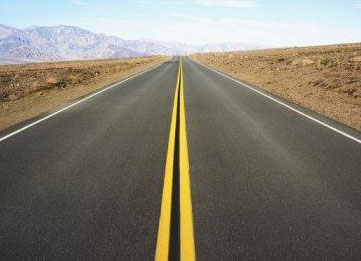
American cinema has been filled with movies about the open road. From “Easy Rider” to “Thelma and Louise,” there is something liberating about the wind in your hair as you speed to a new and unknown destination. Our daring young actor is doing everything in his power to get Mary to leave behind this tired town and take a chance on their new found love. Surely there’s more to this world than this old, decrepit front porch that’s a rusty nail away from collapsing in a heap of broken dreams. The night is not just open to us, it is busting open and with these two lanes of concrete we can go anywhere in the world. All she has to do is just take his hand.

And my car’s out back if you’re ready to take that long walk

From your front porch to my front seat, the door’s open but the ride ain’t free.

The ride is never free. There is going to be a cost. Our young lovers may struggle, they may run out of money, hell, they might even doubt their love at times. But is that enough to not give it a try? You’re only young once and there is an entire world of possibilities ahead of you. We see him pleading, “How long are you going to let this world kick you around like a dog before you take a chance- a chance on me, a chance on love, a chance on us? My car’s right out back, the door is open, all you gotta do is hop in.”

So Mary climb in

It’s a town full of losers, and I’m pulling out of here to win.

The opening scene to our movie ends here. You decide where you want to take it. Bruce Springsteen once described “Thunder Road” as “an invitation.” I invite you to write the rest of the script. Does Mary run back inside to what is familiar? Do the far-reaching tentacles of this town full of losers snatch another victim? Or does she take that long walk to his front seat and embark on a cross-country exploration of the soul? The camera zooms in on our leading man. In the background is a car, passenger door ajar. His hand is outstretched. “Show a little faith Mary, there’s magic in the night.” Fade to black. The rest is up to you.


“Thunder Road” is the opening track (an invitation, if you will) on Bruce Springsteen’s 1975 album Born To Run.

Jungleland (1975)

Exxon-MID11

Cue Soozie and Roy…

I’ll never forget the first time I heard “Jungleland” live. It was about two hours into a typically energetic Boston Garden Bruce set when things got quiet. Then Soozie’s violin and Roy’s piano promised that something special was about to go down. Close to 20,000 members of the E Street family were about to embark on a twelve-minute odyssey down Flamingo Lane. We were going to ride with the Magic Rat in his sleek machine like some lost outtake from “Midnight Cowboy.” We were going to drink warm beer in the soft summer rain. We were all going to meet beneath that giant Exxon sign (or, being in Beantown, maybe we could make it a Citgo sign for the night). Twenty-thousand disciples were waiting for our fearless leader to tell us where he was going to transport us next. We dodged cops, we flashed guitars just like switch-blades, and we hustled for the record machine. We dressed in the latest rage, but we also struggled in dark corners. We were on a ride like no other.

Down in Jungleland…

It is a truly unique and communal experience to sing those three words. Look to your right: three guys in their mid-fifties, salt-and-pepper hair, arm-in-arm, swaying back and forth. Look to your left: a young girl, maybe 14, with Taylor Swift lip-stick and skinny jeans, singing every word like it was the latest Pitbull hit. Look in front of you at the preppy college kid in the Abercrombie shirt and the Northeastern hat, just taking it all in. For three words, we are all one. Singing at the top of our lungs so that the entire world will know exactly where this epic saga is taking place: Down in Jungleland. Jungleland is not a place for the meek of heart. It is dark, and it is formidable, and it is daunting. But more than anything it is alive. And for the first four minutes of “Jungleland,” we think we couldn’t possibly be more alive than we are at that moment.

Cue the Big Man…

Enter Clarence. Larger than life, even from 50 rows away. I’ve listened to the sax solo from “Jungleland” countless times. I’ve listened to it in my ’83 Ford Escort with a bungee cord holding the door closed. I’ve listened to it while mowing my lawn in 95-degree heat. I’ve listened to it in the shower. But up until that moment I had never heard it live. It is surreal. I was taken somewhere I didn’t know I could go. It filled the entire arena until there was no space left to even breathe. Twenty-thousand people in hushed reverence, all in awe of the Big Man. And when he finished and stepped back into the shadows, I felt exhausted, like I had somehow had a part in what just occurred. In a way I think I did; I think we all did. I’d like to think the audience was some kind of medium between Clarence and the Gods of Music.

Cue the Boss…

As the last note of the saxophone rings through the arena, the Big Man somehow fades into the canvas that is the E Street Band. As Bruce steps up to the microphone, we all know our adventure with the Magic Rat is coming to a close. But even after we watch the Rat get gunned down by his own dreams, and after the girl shuts off that bedroom light, one more thrill awaits. That cry. That furious wail that comes from the most remote depths of Bruce Springsteen. It’s the culmination of this twelve minute movie we’ve all just watched–no, acted–in. Everything we’ve seen and witnessed, in the darkest depths of the city, comes forth in the most guttural way. It’s a cry that carries away everyone in that arena. Where you go is up to you. Maybe you just want to drink beer on the hood of a Dodge. Maybe you want to race across that Jersey state line straight into the heart of darkness. Or maybe you want to go beneath the city, where the unspeakable awaits. But that’s Jungleland, right? Choose your path.

POST-SCRIPT:

Cue Jake…

Fast-forward to Gillette Stadium, Foxboro, Massachusetts, on August 18, 2012. The first time I heard “Jungleland” live since the tragic passing of Clarence Anicholas Clemons, Jr. From all accounts, this was only the second time the band had played this song post-Big Man. Many heads were turning as Soozie and Roy started their two-person symphony. Really? Could we be this lucky? We knew Jake Clemons had chops, but was he ready for this? His Uncle’s signature piece? Four minutes into the song we all found out. Jake delivered a gorgeous, soaring solo that would have brought out Clarence’s huge and beautiful smile. Perhaps the best part was watching Jake’s boss during the performance. He was so proud.

“Jungleland” is the final track  on Bruce Springsteen’s 1975 album “Born To Run”.